RSS

Photo Dump: Recent Meals!

Hey guys, I know I’ve been slacking on the posts lately, but much has been going on at home, and I needed a few weeks off the blog!  Things are finally getting back to normal around here, and are better than ever!  We’ve had a new addition to the household in the form of my wife’s 16 year old second cousin.  It’s a big transition, but she is in a good place here at home with us, and we are very happy to have her around.  Long story, but happy ending!

So, here are some recent photos…


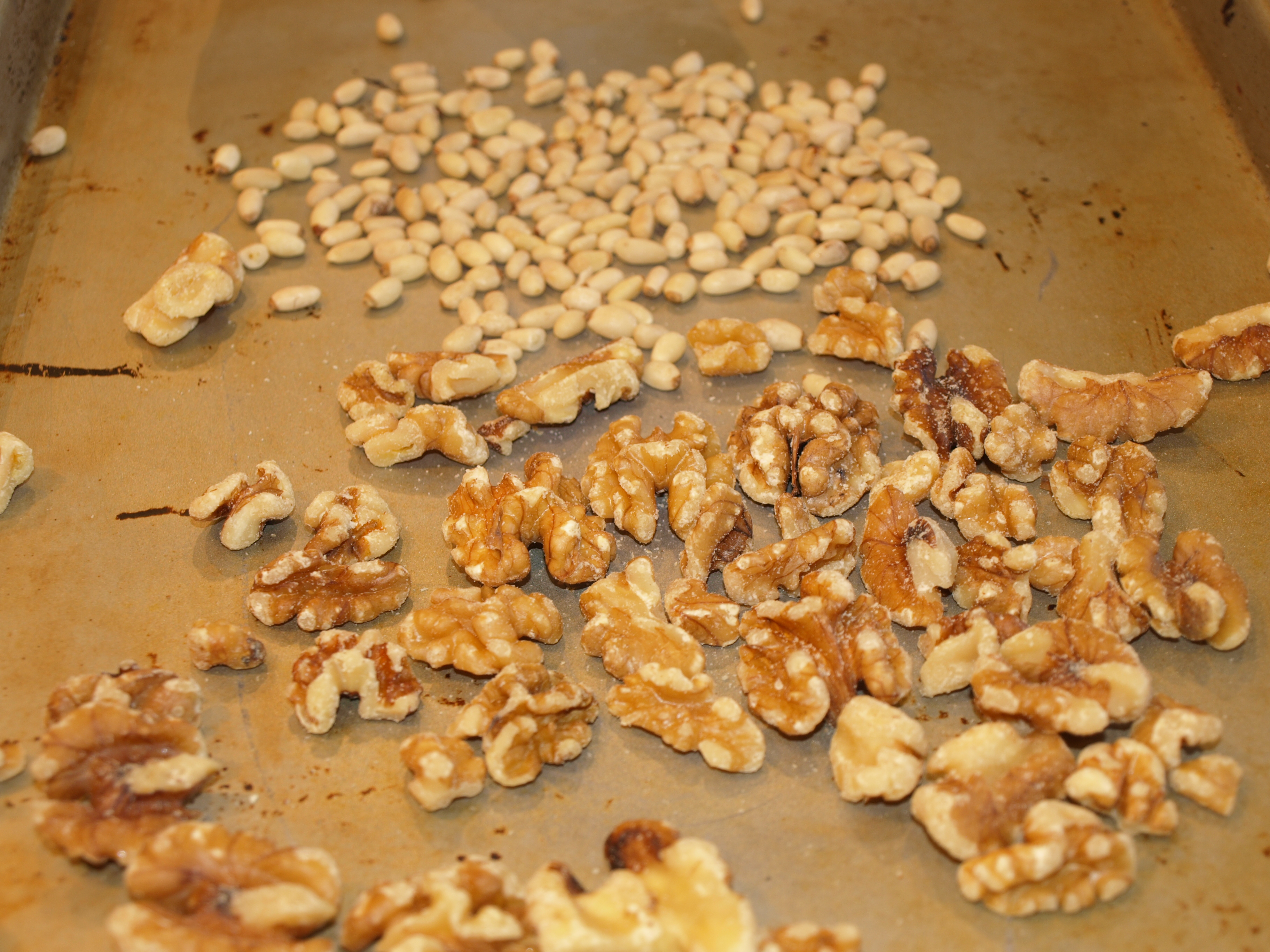
Roasting walnuts and pine nuts for pesto…


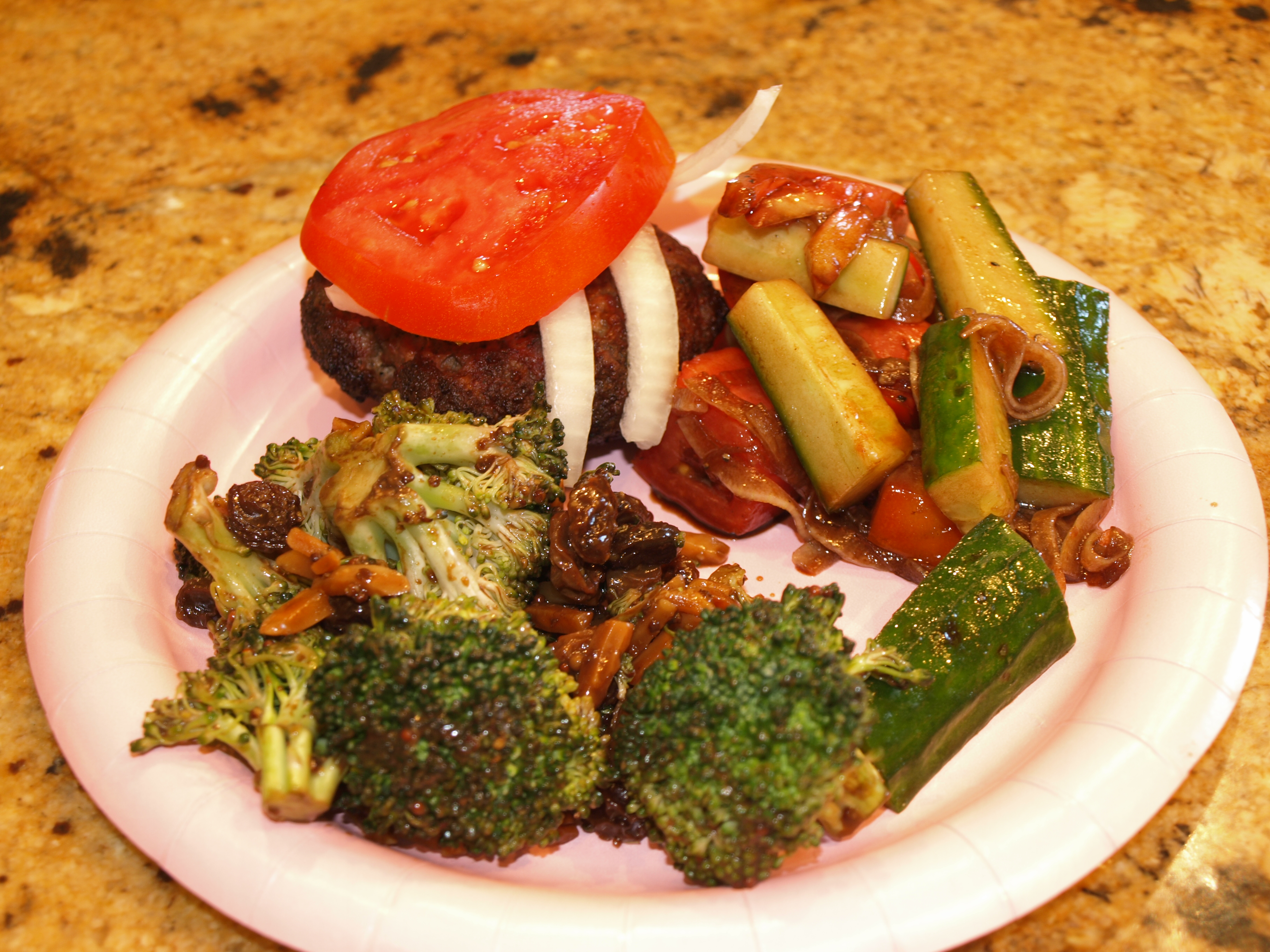
Fourth of July Lunch! Grassfed hamburger patties, Paleo Broccoli Salad, and a simple tomato cucumber salad with shaved red onions and balsamic vinegar.


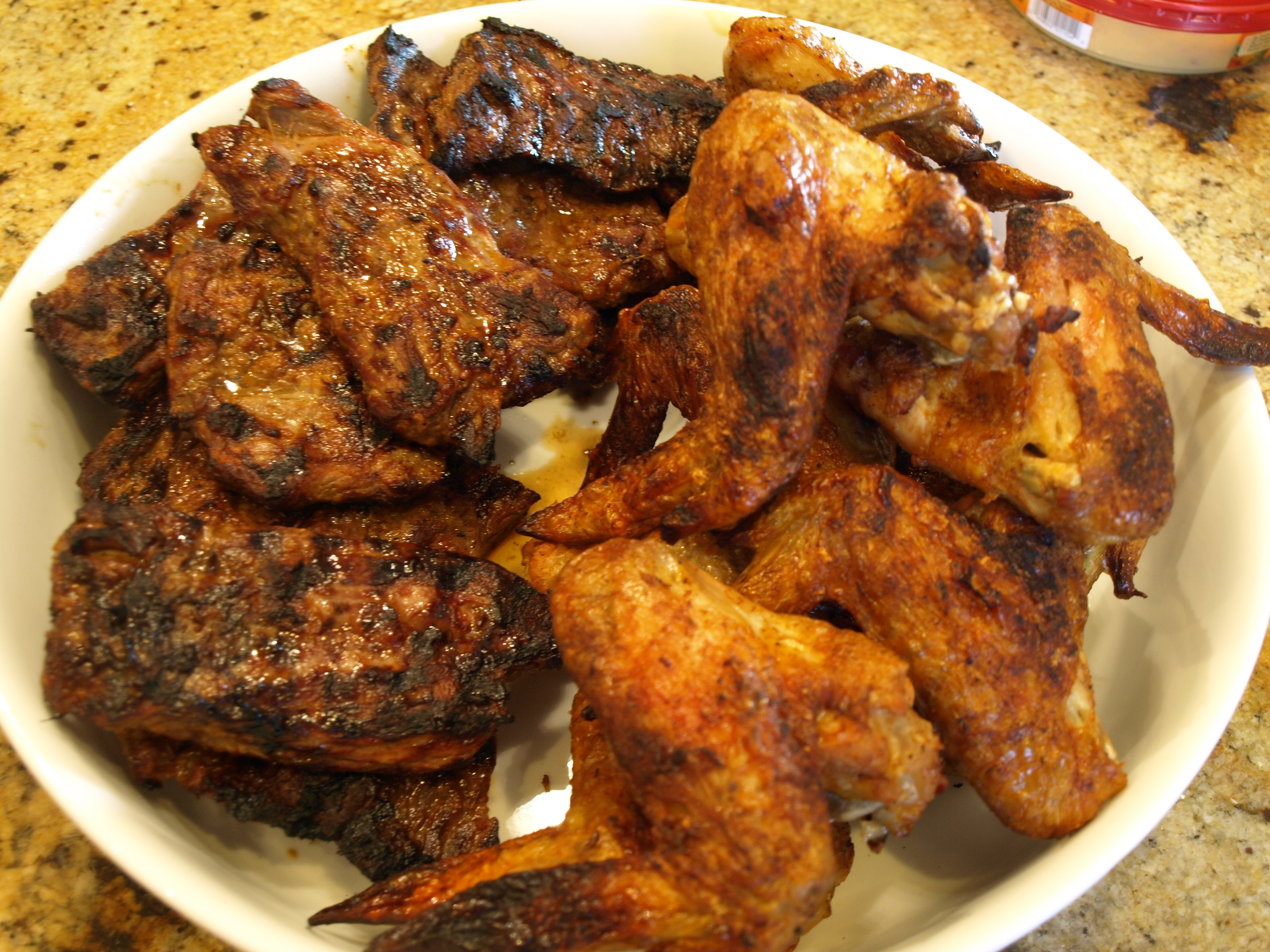
Fourth of July Dinner included some Spanish Pimenton marinated skirt steak, Cajun dusted oven roasted chicken wings


Vacuum Sealed Ribeyes destined for the Sous Vide Supreme


Steaks bathed in the Sous Vide at 130 F for around 2 hours, make sure they are REALLY dry before you finish them off in a scalding hot cast iron skillet.


Finished Sous Vide Steaks with my wife’s favorite asparagus salad on the side.  Just steamed asparagus, quick whole grain mustard balsamic vinaigrette, and some hard boiled eggs on top.  Want to really bring the heat?…crumble a little lump crabmeat on top!


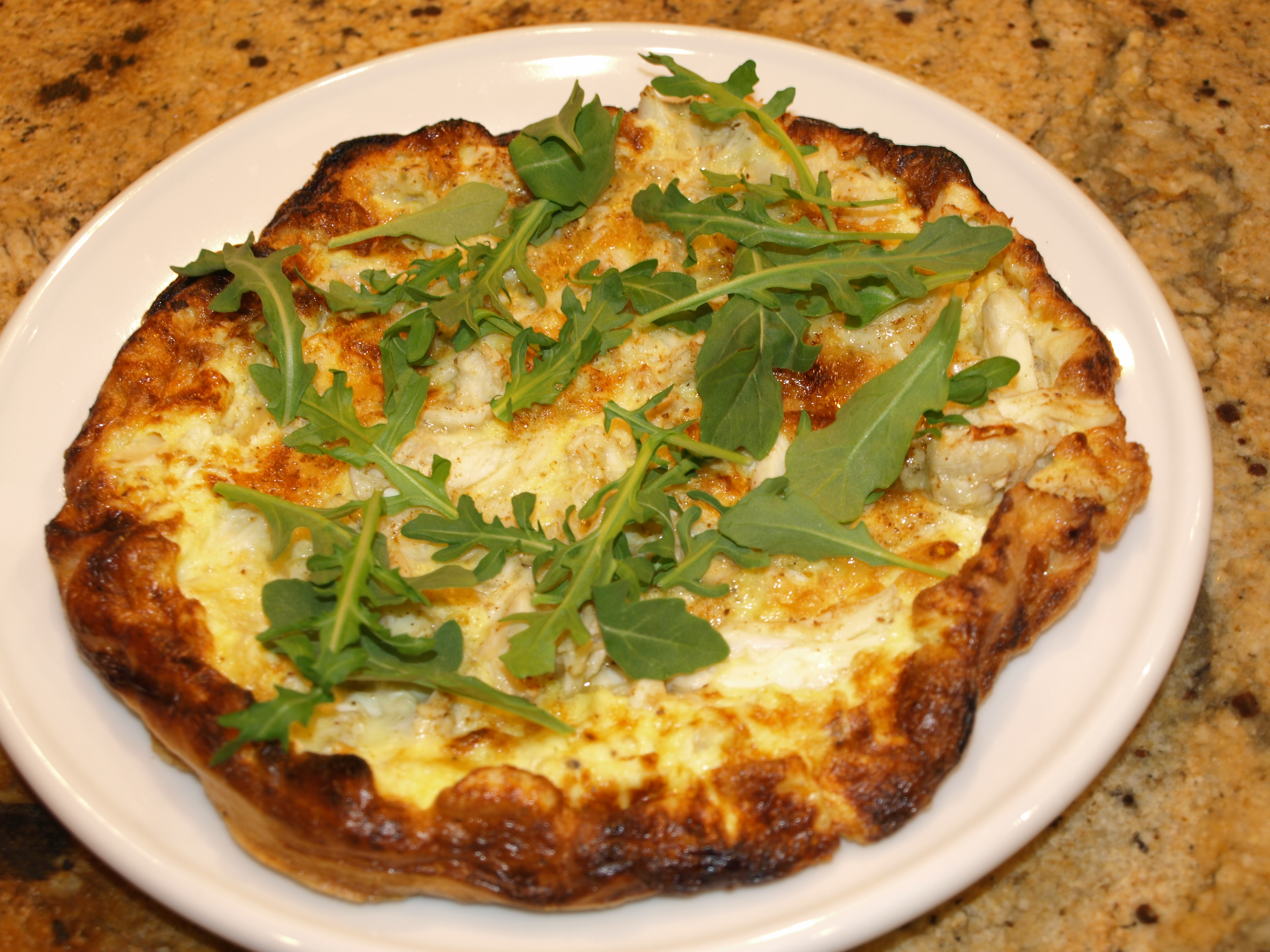
Lastly, here is my creation one night while hungry and at home alone.  Lump crabmeat omelette!  Three eggs tossed into a hot skillet well coated with ghee.  As the eggs set a bit, sprinkle in the crabmeat.  Transfer to a preheated broiler and cook until sides are puffy and brown, and the center is set.  Top with some fresh arugula, and behold a masterpiece!

Feel refreshed, back in the saddle.  Stay tuned a week from today for the first post in my new running collaborative series with Sarah at The Paleo Mom, our first topic we will tackle is Eczema.

Will also fill everyone in soon on an observational study I’m working on with Dallas and Melissa at Whole9Life.com looking at Paleolithic Nutrition and Diabetic control…should be awesome!

So long for now!!

One last thing, please visit my good friend and next door neighbor at her new Paleo Recipe Blog the FitPaleoMom.  She is a great cook, and I am lucky enough to sample her goods as she develops recipes.  Go visit her sight and let her know I sent you, that way I can demand more samples!!!  By the way, her and her husband are the ones who tuned this doctor in to Paleo in the first place!

-E

 
1 Comment

Posted by on July 21, 2012 in Uncategorized


New Recipe: Moroccan Saffron Chicken With Almonds

Greetings everyone, it’s been a week or so since I’ve posted…just took a little time off to recharge the batteries.  I’ve also been working like crazy, but then again, what’s new?!

Over the last few days I’ve started cooking again a lot more, and it has really got me thinking about finally going to work on reworking my favorite recipes to make them Paleo.  My main passion in life has always been cooking and it’s the one thing I do everyday to relax and unwind.  Many see cooking as a chore, I just don’t in any way.  So, here is the first of my efforts.  Sorry in advance for the lack of photos, my camera was out of batteries!

Ingredients:

4 Large Chicken Breasts

1 Large Yellow Onion

2 Celery Stalks

2 Carrots

1 Large Clove of Garlic

1/2 Cup Fresh Almond Meal

1 Cup Chicken Stock

Large Pinch of Saffron

Fresh Cilantro to Taste

Cut the Chicken breasts into bite sized pieces, season with salt and pepper, and set aside.  Chop the onion, carrots, and celery into very fine dice.  Warm up the chicken stock just a bit and put the saffron in it to start the flavors infusing into the stock.

In a heavy bottom pan sauté the chicken in two patches with a healthy dose of olive oil.  Once the chicken is cooked and starting to brown remove to a warm plate.  Add a touch more oil and cook the onion, celery, carrot, and garlic clove (roughly chopped) until cooked down, maybe 5-7 minutes.  Once the veggies are cooked add the saffron stock and almond meal stirring to combine.  Add the chicken along with another cup or so of water, bring to a boil, and simmer for 30 minutes.  I like to let the sauce reduce a bit towards the end of the cooking to concentrate the flavors a bit.

Serve over some Cauliflower rice and top with as much fresh cilantro as you like!

I served it here with some simple roasted okra and it was an awesome meal.  The combination of the saffron and the almonds is amazingly rich, and I think I could eat this every night!

Hope y’all get to try it and share my love for this dish!  I’m a big fan of Moroccan flavors, and they lend themselves fairly well to Paleo conversion.  Hope all have a great Fourth of July!!

-E

 
1 Comment

Posted by on July 3, 2012 in Main Entree, Recipes


Tags: ,

The Paleo Mom and PaleolithicMD Team Up to Tackle Medical Topics!

Sarah Ballantyne AKA The Paleo Mom

I’m very excited to announce that I have teamed up with Sarah Ballantyne at The Paleo Mom in a long-term collaborative blogging effort! Every month we will tackle a new medical problem and discuss in detail what it is, what you should know about it, what you should ask your doctor when seeing him or her for it, and how Paleo may affect your treatment plans.

Our goal is to provide you with the most up to date medical information we can so you feel best educated to deal with these sometimes difficult illnesses. It’s not all about Paleo, but more about education and results.

Check out her website for a post introducing the collaboration where she interviewed me and we lay out our plans. Look out soon as we tackle our first topic…Eczema! Click here to visit her site!

-E

 
1 Comment

Posted by on June 26, 2012 in General Paleo Discussion


Tags: , ,

Update on Calcium Supplementation in Post-Menopausal Women

One of the most common topics I discuss with my female patients concerns osteoporosis and calcium supplementation.  There have been several recent studies related to calcium supplementation in the news lately and I thought it would be a great topic to discuss, particularly in conjunction with the Paleo lifestyle.

Osteoporosis is a condition where bones lose strength from loss of the calcium matrix that makes them strong to begin with.  Once bones start to demineralize it leaves you more susceptible to fractures.  Every year millions of females fall and break their hips often leading to nursing home stays, and death from secondary infections are not uncommon.  For years the mainstay of prevention for post-menopausal women has been appropriate supplementation with calcium and Vitamin D.  Vitamin D is necessary for your body to be able to absorb dietary calcium.  Recently these recommendations have come under fire from several areas.

Before we get too far into this it’s important you discuss calcium supplementation in the context of how old the patient is and what her menopausal status is.  This post is concerning post-menopausal women who do not have a diagnosis of osteoporosis.  Optimum bone health is a different topic all together for pre-menopausal women as the presence of female hormones changes the game completely.  Also, if a women has already been diagnosed with osteoporosis, supplementation with calcium would likely still be recommended given a risk-benefit analysis.

That said, it has always been common knowledge that if you want to keep your bones strong after menopause, you need to make sure and take in enough calcium and vitamin D.  Recommended daily supplements vary but often call for at least 400 IUs of Vitamin D and 1000mg of Calcium.  This is in fact what I have recommended for my patients for years…but that is changing rapidly.

The first problem came last year when a meta-analysis came out in the British Journal of Medicine that showed a modest increase in the risk of cardiovascular events, especially heart attacks, with routine use of calcium supplementation with or without vitamin D.  The most interesting thing is that this was a meta-analysis of the Women’s Health Initiative Study, the same study we had used for years to justify our use of calcium to prevent fractures!

Calcium supplements with or without vitamin D and risk of cardiovascular events: reanalysis of the Women’s Health Initiative limited access dataset and meta-analysis BMJ 2011; 342 doi: 10.1136/bmj.d2040 (Published 19 April 2011)

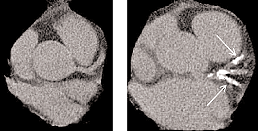
To help you better understand the connection between calcium and vascular disease look at these pictures.

The picture on the left is a normal heart, notice the relative consistency in the density of the chambers and the vessels.  On the right is a diseased heart with hardened arteries.  Note first the size difference, diseased hearts tend to work harder, enlarging the muscles and making it less efficient.  Also notice the white spots noted by the arrows; these are the coronary arteries that supply blood flow to the heart itself.  When you have a heart attack, it is these arteries that are affected.

Here is an example of calcified arteries in the brain.  Hardening of the arteries can happen anywhere; in the heart as above leads to heart attacks, and examples like these in the cerebral arteries lead to strokes.  Calcium shows up bright white on Xray which is why bones show up that way.  Note there is very little difference between the skull bones and these cerebral arteries!  So you need calcium intake, but could too much intake lead to accumulation in the wrong places?  This study seems to indicate that may be the case.

More recently the US Preventive Services Task Force released recommendations that post-menopausal women should not take daily low doses of calcium and vitamin D to prevent bone fractures.  They cited a lack of definitive evidence to show it actually works, and also pointed to the chance of increased rate of heart disease and kidney stones from too much calcium.  Vitamin D has also been a hot topic of late as some say it can help prevent some cancers.  The task force also reported that at this time there is insufficient evidence to support these claims.

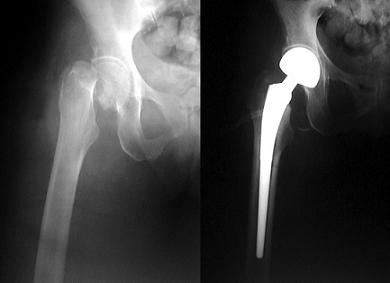
So what are we to do?  The fact that there are 1.5 MILLION osteoporosis related fractures in the US every year makes this a massively important topic.  Here is what a typical femoral neck fracture looks like before and after total hip replacement.
But, before we get to what to do, let’s talk about how we got here in the first place?

It’s very common in medicine to find something in nature that helps prevent disease and try to replicate that benefit with supplementation.  Take lycopene for example, which is found naturally in tomatoes.  It was found that lycopene could reduce the risk of prostate cancer in men, so it was isolated and given to men in supplement form.  Funny thing is, it only seemed to help prevent cancer when it was in a TOMATO!  Supplements offered no benefit.

Taking this concept to calcium, a recent study showed that females who took the recommended daily calcium dose in SUPPLEMENT form had a higher risk of heart disease, while women getting the same amount of calcium from FOOD did not have this higher risk.  Imagine that, God designed calcium to strengthen your bones, but only when you eat it the way he meant you to!

I hear everyone now, but how do I get enough calcium doing Paleo when I can’t eat dairy?  You ladies sitting down?  There are more sources of calcium then just dairy…quite a few actually.  Here are some examples:

(Ignore the soybeans listed above, and replace with a favorite of mine…figs!)

Listen to this statement from Suzanne Steinbaum, spokeswoman for the American Heart Association.  “To tell people, ‘take calcium and vitamin D to prevent fractures as you get older.’ that’s not panning out anymore.  Even if you are at risk for a fracture, maybe you have to try other lifestyle changes, like diet and weight-bearing exercise.”  Don’t you like the way she put it…MAYBE you’ll just have to try actually eating right and moving around a bit!  If this statement does not sum up why we have an osteoporosis problem in the first place, nothing will.

There is no question that osteoporosis is on the rise.  This is due to multiple reasons, but in my opinion it is from over reliance on supplementation for prevention over the traditional recommendations of dietary calcium, Vitamin D from the sun, and plenty of weight bearing exercise.  Many hoped you could just stay on the couch and take some pills and all would be well.  Like so many times before, we have learned that taking the easy way out just does not work.

So what is a post-menopausal female to do to prevent osteoporosis?  That’s pretty simple.  I think the recommended daily intake of Calcium still needs to be around 1000mg, but just make sure you get it from your diet, not from supplements.  The take home message of these recent studies is that calcium in the form of supplements do not appear to minimize fracture risk in this population, and that they may in fact increase the risk of heart attack and kidney stones.

Make an appointment and talk to your doctor about calcium and whether you should be taking it.  Are you pre-menopausal?  Prevention strategies will be very different for you, and again I encourage you to talk to your doctor to make sure you are on the right track.

The PaleolithicMD motto is Real Food…Real Health.  I can’t think of a simpler way to combine all the lessons calcium supplementation has shown us.  You need more calcium, just eat it in REAL FOOD!  Don’t ignore God’s gifts of calcium rich foods in favor of modern day convenience.  After all, calcium pills don’t grow on trees…figs do.

-E
 
5 Comments

Posted by on June 26, 2012 in General Paleo Discussion


Tags: , , , ,

The Negative Side of Paleo: Yes, There is One!

Last night I had the pleasure of participating in a lecture which served as the start of an 8 week Paleo/Crossfit challenge for 6 patients who have undergone successful bariatric surgery.  To be considered a success you must lose over 50% of your weight so they have all undergone significant transformations.  That said, they were all selected for this program by their surgeon because they have stopped losing weight and have not reached their goals.  They came into the night with no clue what lie ahead or any knowledge that the Paleo diet would be recommended for the program

As William Albritton (CrossFit Alexandria Trainer) and I presented the information, the reaction was typical.  They did not understand why the Paleo no-nos are bad for you, and wanted explanations of how many of these supposedly “healthy” foods are bad for them.  As we talked to them, I started to think about how I would react when presented so much information in so little time.  I could see intimidation in their eyes as we checked off every common kind of food they could no longer eat.  This got me thinking on a grander scale about some of the negative that Paleo can bring out in people.  Yes, I think there is in fact negative that can come from Paleo!  So, here are some of the things I consider to be the negative side of Paleo.

Stress:  Nobody in life is perfect, and even the person you consider to be the most amazing follower of Paleo there is does in fact eat the wrong things at times.  Sometimes people overtly cheat, but often we will cheat with things we are not even aware of.  I think it is vital not to obsess about being perfect when you were in fact created to not be.  When I first started Paleo I was quite guilty of this.  I worried so much about cheating that even on the odd occasions when I would, I would almost get depressed afterwards for losing my discipline.  I eventually realized that the pressure I was putting myself under was a major stress in my life, and it was quite frankly unhealthy to live with that kind of stress.  To the contrary, part of the Paleo lifestyle should be about minimizing the stress in your life in order to maximize the hormonal environment in which we live.  By constantly micro-managing my life and my diet I was defeating one of the most vital parts of this lifestyle.  On top of that, I was pretty much not making it as fun as it should be.  When I think of Paleo I think of fun, varied, energetic, delicious, simple, healthy, freeing…all things you can only experience if you don’t stress about perfection.

Turning Others Off:  Ok, it’s one thing if you obsess and stress about your own diet, but have you ever been around the Paleo guy who has a seizure when you put Splenda in your coffee?  I see you out there!  I think it is so important to be supportive of your fellow Paleo brothers and sisters with a great deal of understanding.  In my house for example, I will confess to all of you that I can in fact be….a little annoying about the Paleo thing.  (I’m certain my wife will make herself available for interviews on this topic if needed 🙂  I was so crazy about it the first few months that my wife has since confessed to me that the reason she did not get on board at first is that I was smothering her with Paleo talk and I may, although I’m not completely accepting this, have looked at her a little funny when she ate certain things.  Who wants to deal with that?!

Don’t make that mistake, and luckily I think I figured it out pretty quick.  One of the things I emphasized during our talk last night was that we are all humans and that I certainly was not 100% on Paleo.  I do in fact try my best to eat clean, but it’s not worth alienating others over.  When people follow the Paleo lifestyle for some time I find that they start to feel proud to be a little different, proud to know that they are making a difference in their long term health with their diet.  That said, care must be taken not to look down on others for either not following Paleo, or not following as “well” as you do.  Don’t be that guy!

Missing the Big Picture:  If you do it, why do you follow Paleo?  To lose weight?  To look better?  To get stronger?  To get faster?  As a doctor I think your answer should be simple…to be healthier.  When you are trying to talk to others about the lifestyle it is easy to get off track.  Just last night during our “Introduction to Paleo” talk here are some of the tangents we went on:  How the food industry manipulates foods to trick us, fast food companies targeting kids with advertising, the use of “heart-healthy” labels on foods such as cereals, what does “cage free” really mean, are artificial sweeteners healthy, are green beans really Paleo, are cows treated humanely in typical slaughter houses?  Now look, each of these questions are important in certain conversations, but I personally don’t think they belong in an intro to Paleo talk.  Paleo comes down to two simple lists: what you can eat, and what you can’t eat.  You eat these things and don’t eat these things in order to get healthier.  What can topics like these do?  What could they easily have done last night?  They quite simply get in the way of Paleo’s basic message.  Several times during the talk I could see people’s eyes start to glaze over with too much information.  One lady asked where in the grocery store she could find “omega-3s”.  We were emphasizing them too much and it was getting confusing.  Topics like these are details that are less important than the big picture with Paleo.  Don’t get lost in the forest of Paleo facts and politics, just eat real food and get healthy!

Making Paleo an Idol:  “You shall have no other god’s before me.” Exodus 20:3 (ESV)  I don’t want to get biblical here on you…well ok, yes I do…but this is really important.  Your life ultimately needs to be about God, family, love, relationships; things that matter more than others.  Not ten days into changing to Paleo I told my wife that I feared it was becoming an idol for me, and that if I could not separate myself from that I may have to give it up.  Obsession with Paleo can be a major battle for many, just like obsession with exercise is for others.  Following Paleo cannot become more important to you than your spouse, or your kids, or your family.  Before you dismiss this, think a moment and I’m sure you know someone who fits this mold.  It may even be you!  Know anyone who won’t go to family get togethers because the rest of the family doesn’t eat Paleo?  Have you completely shut off friends from your life because they eat bread?!  Paleo cannot and must not stand between you and the important things in life.  If Paleo is an idol in your life don’t panic, just take a step back and evaluate how it is affecting those things you love the most.  Make it important, but make a list of things that must always go ahead of it.  Stick to your list and all will be well.

These are just a few of the thoughts that I jotted down during our talk last night.  I have lived through some of the negatives of Paleo myself, and I want to warn others of the dangers!  Our goal must always be to spread paleo to as many others as possible with the hope of making them happier and healthier.  If people see you more stressed than you were before you went Paleo, if you turn others off by being critical of their diets, if you miss the big picture and concentrate instead on minor aspects of the lifestyle, or if you make Paleo an idol that stands before your beloved friends and family; you likely won’t make many converts!

Paleo is good!  If there are any areas of your life where it comes to Paleo that are negative or bad, address them and change them!

-E

 
11 Comments

Posted by on June 24, 2012 in General Paleo Discussion


Tags: , ,

Real Patient Data on an Insulin Pump Patient Plus 1

I saw a lady in follow up yesterday that was a great addition to our growing list of successful “Real Patient Data” series.  She is a 59 year old obese African American female with high blood pressure, diabetes, high cholesterol and sleep apnea.  I’ve seen her for many years and she has really struggled controlling her diabetes.  She actually ended up retiring a little early from her job over a year ago because she was finding it impossible to care for her diabetes and work at the same time.  We ramped up her insulin for a while and eventually convinced her to go on an insulin pump that should have taken care of things.

After starting the pump we saw a great decrease in her Hemoglobin A1C which dropped from above 12 to10 and then to 9.  The problem is that it got stuck on 9 and we have not been able to lower it much more.  I increased the basal insulin pump rate several times, and it just did not have much influence.  We reviewed her diet and she truly does not eat too much or too badly, but she continue to eat her “heart healthy” oatmeal and cereal for breakfast and other carbs that she has been told for years are good for her.

I have broached the subject of Paleo with her a few times, but she never really considered it.  A month ago I saw her and she was convinced her numbers would be better because she had really stuck to her diet and not cheated at all.  The good news for her is that her A1C dropped!  Bad news is, it dropped from 9.01 to 9.00.  Dejected does not touch where she stood at this point.

I talked to her again about Paleo and asked her what she had to lose?  She is a little different than many patients in that she REALLY wants to control her diabetes, to the point that as I mentioned she retired early to be able to concentrate on doing so.  We went over the entire thing again, I really took the time to explain WHY she could not eat the things Paleo restricts, and she finally realized what I already see…what she is doing is not working!  She agreed to give it 30 days and on her way she went.

She came back yesterday and felt pretty good.  When someone really tries to get better over time, and fails over and over, their confidence gets drained.  She had no confidence that Paleo would work, so imagine her smile when I told her that after 32 days of Paleo, her Hemoglobin A1C had dropped from 9.00 to 7.45, and she had shed 9 pounds.  I might add that we made NO adjustments to her insulin pump prior to starting Paleo, so this can be attributed to her diet as nothing else changed.

Several years of frustration corrected by a simple dietary change.  Will she get off her pump?  Absolutely not.  Will she get her diabetes under control?  I truly believe so as long as she can maintain her current diet.  Will we be able to cut her insulin requirements?  I hope so!  This is a real lady, with a real problem, and real problems controlling it.  She had tried hard the traditional way (heart healthy diet and more insulin) and gotten no where.  I don’t think she’ll be going back to the traditional way any time soon!

I’ll also share a quick story about another patient I saw yesterday.  I had spoken to him and his wife 3-4 months ago about Paleo, and they had agreed to give it a go.  He is mid 50’s and healthy aside from his high blood pressure, diabetes, and the stroke he suffered around a year ago!  They missed their 30 day follow up, so I figured they had not done the diet.  As expected they came in and they did not mention it at all (figure they hoped I had forgotten!)  We went over everything, and his numbers looked great.  His blood pressure was perfect, his cholesterol was lower than treatment goals, and his Hemoglobin A1C was in the “non-diabetic” range.  He smiled, looked at me and said “You see, I don’t need that crazy diet after all!”

That’s when I smiled and said “You are right, your numbers are perfect, and we can be happy with that.  My problem is this…your numbers have been perfect for the 4 years I have taken care of you.  They are always perfect…they were even perfect when you had your stroke!  So are you ok with that, having perfect numbers and having a stroke?”  He looked at me with a little smirk as if to say that I love when I’m right; and I do love when I’m right!

As we talked a little more I discovered that they had indeed taken some of my advice, and changed much of what they ate.  He still ate cheese, but had been able to cut much of the carbs from his diet…just not all.  As we looked at his numbers, we saw that even with these minor changes, we saw improvements in his A1C, Total Cholesterol, Triglycerides, HDL, and LDL.  They are not what I have seen with strict Paleo, but they were something.  I encouraged him to keep trying the best he could, and we would squeeze everything out of his dietary changes that we could.  Take home message: In patient care, 50% improvement is better than no improvement!

I hope these patient experiences do two things for everyone.  First, I hope they encourage all of you doing Paleo to keep doing it, and those considering it to give it a try (especially if you already suffer from chronic disease).  Second, I hope it encourages you to talk to others and try to convince them to change their ways as well.  What better gift to another than to help extend their quality of life and limit chronic disease!

Hope all have a great weekend, and keep a look out next week for the first in a series of collaborative posts with Sarah at ThePaleoMom.com!

-E

 
1 Comment

Posted by on June 22, 2012 in Patient Experience


Tags: , , ,

The Road to Fitness: Exciting Application of Paleo to Weight Loss Surgery Patients

Wanted to share a very interesting and exciting program I will be getting started with tomorrow.  Our local bariatric surgeon Dr. Sam Bledsoe has teamed up with myself and William Albritton, a first class trainer from our local Alexandria Crossfit, to put together an 8 week “The Road to Fitness” class.  Sam and William came up with the idea and asked me to come on board, but William is truly the work behind the program. Dr. Bledsoe has recruited 8 patients who have all had successful weight loss surgery and have lost over 50% of their pre-surgery body weight, but have reached a plateau and are unable to reach their ultimate goals.  They will go through the following program.

-Tomorrow night we kick it off with an Introduction covering the program overview, an introduction to crossfit, and a nutrition review discussing Paleo concepts (Will be encouraged to follow Whole 30 guidelines for first month)

-Over 8 weeks they will be scheduled for a series of physical activities including introductary low level crossfit WODs which will be adaptable to their current abilities and individual/group exercise away from the box

-They will maintain daily food logs which will be reviewed weekly by the coaches

-We will also have several get togethers to exchange Paleo recipes and food

Weight Loss Surgery patients are like any other patient, and the concepts of the Paleo lifestyle are a great way to kickstart their weight loss again, help them reach their goals, and further limit their exposure to chronic disease long term.  We will also be getting a group of people to utilize CrossFit who normally would be very intimidated to even show up for an introduction class.

Win-win all around!

Hope all have a great day, and please wish all our participants luck!

-E

 
2 Comments

Posted by on June 21, 2012 in General Paleo Discussion


Tags: , , , ,

Coffee and Gluten: My Current Take

Greetings everyone, it’s been a few days since I’ve posted anything.  On the twitterverse the last few days there has been a great deal of talk about coffee and it’s apparent “danger” particularly with respects to possible gluten related sensitivity.  I love coffee, and I hate to see it get a bad name.  So, lets look at this a little more carefully.

First lets look at the source of this information.  Well, the problem is, there is no real source!  A chiropractor published information form “internal lab research” that 10% of coffee is a protein that cross reacts with gluten antibodies.  That is all the information we have.  I see no research study, no detailed information such as what type of coffee was tested, how it was tested, or how they connect this information to clinical implications.  How many coffees were tested etc?  I did a quick search on PubMed.gov for “coffee and gluten” and I got zero hits.  So basically we have an “expert” stating his findings, and no actual data backing up his claims.  I would be vary wary of accepting this kind of statement as fact until we see more information.  Hopefully more detailed information will come soon, until then I will keep drinking my java.

I would like to note that after a quick we search on google, I was able to find the following organizations who have declared coffee gluten free:

-The Celiac Sprue Association

-The National Foundation for Celiac Awareness

-The University of Chicago Celiac Disease Center

-The Mayo Clinic

Please check the labels of your coffee as not all are gluten free due to processing conditions.  That said, most are clearly labeled if they contain no gluten or gluten byproducts.

Now, is coffee bad for you?  Let’s look at some research with coffee that tells us that the stuff is actually good for us!

-Drinking one to five cups of coffee per day reduces your risk of having a stroke by as much as 25 percent. (Susanna C. Larsson, et al. “Coffee Consumption and Risk of Stroke in Women.” Stroke: American Heart Association Journals, 119, 1116-1123.)

-Women who drink four cups of coffee per day are 20 percent less likely to be clinically depressed than women who drink only one cup of coffee per week. (Michael Lucas, et al. “Coffee, Caffeine, and Risk of Depression Among Women.”  Archives of Internal Medicine, 171 (17), 1571-1578.)

-People who drink more than six cups of coffee per day are 35 percent less likely to have type 2 diabetes than people who drink fewer than two cups of coffee per day. (Rob van Dam and Hu, Frank. “Coffee Consumption and Risk of Type 2 Diabetes.”  Journal of the American Medical Association, 294 (1), 97-104.)

-A Harvard School of Public Health study shows that men who drink six cups of coffee a day have a 60 percent decreased chance of developing a dangerous form of prostate cancer, as well as a 20 percent decreased chance of developing any other kinds of prostate cancer. (Journal of National Cancer Institute)

-Drinking a few cups of coffee a day could lower the risk of developing Parkinson’s disease by as much as 25 percent, according to a study published last year in the Journal of Alzheimer’s Disease. (Journal of Alzheimer’s Disease)

-Coffee moderately reduces the incidence of dying from cardiovascular disease (Lopez-Garcia et al. The Relationship of Coffee Consumption with Mortality” Annals of Internal Medicine 2008

-Coffee consumption found to be inversely associated with total and cause-specific mortality.  Freedman et al. Association of Coffee Drinking with Total and Cause-Specific Mortality. New England Journal of Medicine 2012

JAMA, Archives of Internal Medicine, Stroke, New England Journal of Medicine…we are talking heavy hitters here.  It is very, very hard to get research published in these peer-reviewed journals.  You can never believe everything you read, but starting with a well respected source is always comforting.

Now please understand, I am not discounting the above claims of cross-reactivity of 1/10 of coffee to gluten, I just cannot be convinced without any further evidence.  As in all things, you need to weight the good with the bad when making food choices.  As long as we have a wealth of solid clinical data showing the multiple health benefits of coffee I would be slow to stop drinking based on one article presented without evidence.

Think of it this way; If a drug company released “internal lab data” claiming it’s drug superior to another, and left it at that, would you believe it?  They could of course be right, but why not provide more information to help people make more informed decisions.  Without this information it leaves too many questions unanswered to change your behavior.  Including information about the specialty lab which can test you for this condition also should concern us for an underlying connection between the source and the proprietary reference lab.

The world of medical information changes daily, and the internet makes this information spread like wild fire in only a few days time.  When presented with information, particularly information pertaining to your health, always take a step back and examine the source, the credibility of the source, and any information contrary to that which is being presented.

My mind will always remain open, and it may change concerning coffee and gluten if more definitive clinical data is presented strong enough to change my mind.  For now though I see no scientifically based reason to stop drinking coffee.  In fact, I see a great deal of scientific evidence that I should probably drink more!

Yes you are right, a nice hot cup sounds pretty good right about now!

-E

 
16 Comments

Posted by on June 19, 2012 in General Paleo Discussion


Tags: , ,

Recent Good Eats at the Hacienda!

So much has been going on lately that I have failed to post much of what I have been eating lately.  Tonight is pretty exciting because my friendly FedEx man delivered my new 27 Inch iMac today and I’ve been getting it all set to my liking over the last few hours.  I’m Very excited about the new machine, and hope to really utilize it to make the content of the blog even better.  Enough of that, on to the food!

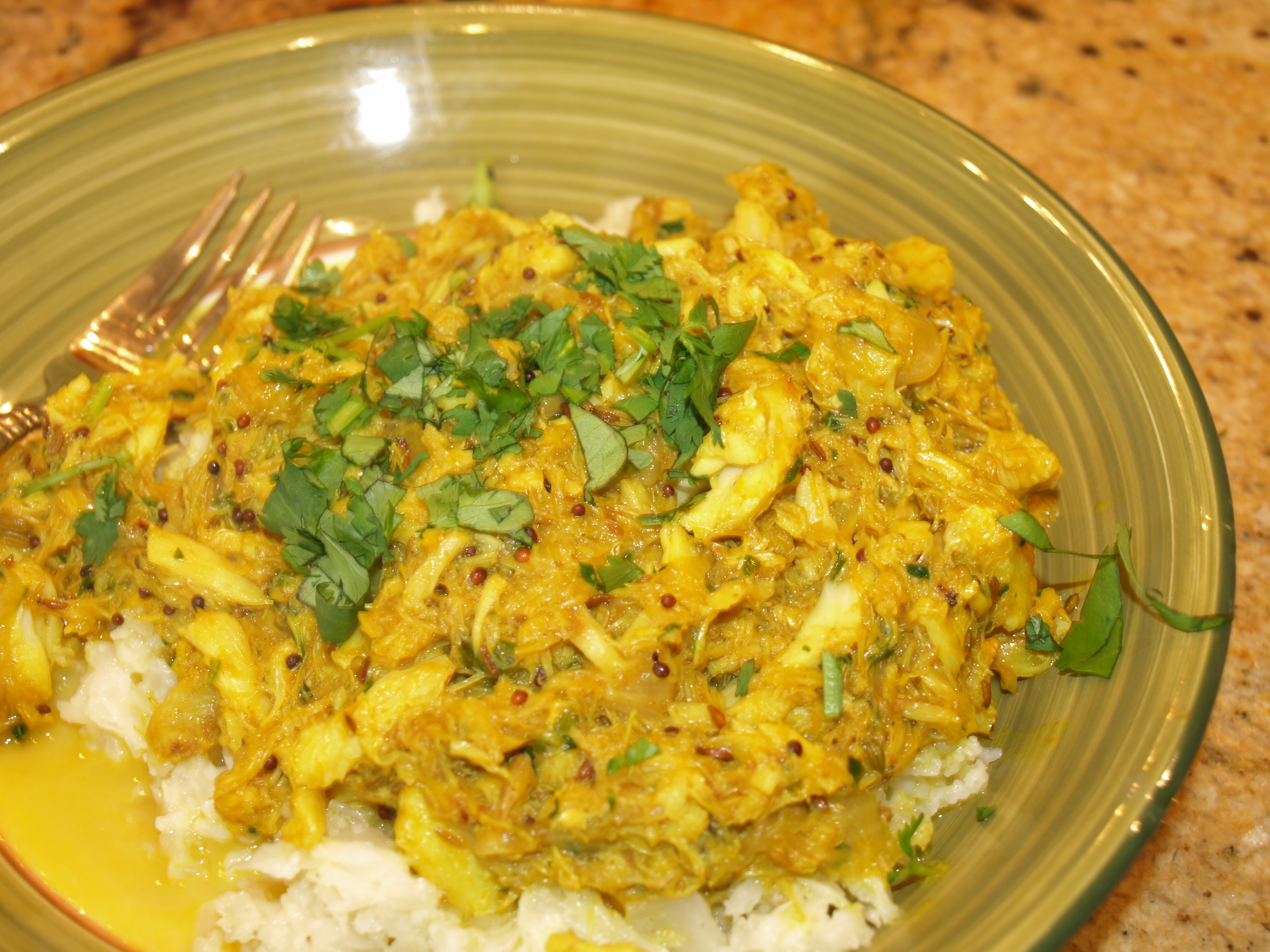
I love curries, and the other night I really craved a crab curry I used to make before going Paleo.  This recipe is from one of Jamie Oliver’s books and after reviewing it, I figured out it did not need even one alteration to make it compliant!  Now that is convenient.  It’s a classic curry with lots of deep flavors from cumin, fennel, mustard seeds, turmeric, garlic, ginger, etc.  The key for me is to put extra cilantro both in the dish, and on top when serving.  Here is a picture of the ingredients and the finished product. (I served it on top of some cauliflower rice)

Tonight I cooked a Ribeye Roast in my Sous Vide Supreme.  First I seasoned it with my own rub made of spanish smoked paprika, granulated garlic, salt, and pepper, vacuum sealed it, and I let it soak for 24 hours at 130 F and pulled it out tonight.  This cut of meat does not need to cook this long, but I leave it in longer more out of convenience.  The longer soak does not in any way negatively affect the finished product.

Here is the meat after the soak in the sous vide.

Next I heated up the trusty cast iron skillet and seared each side well.

Lastly, here is a shot of the roast cut, and my dinner plate with a side of bacon green beans.  Note how the meat is cooked perfectly medium rare though out, “edge to edge.”  This is what Sous Vide cooking is all about!

So there you have two quick meals I’ve cooked in the last two days.  Keep experimenting guys with whatever sounds good.  Curries are great because they really lend themselves to easy conversion to Paleo.  Hope all are well, gotta hit the sack…

-E

 
1 Comment

Posted by on June 15, 2012 in Main Entree, Pictures


Tags: , ,

Why I Do What I Do: Check This Out! (Plus a Little Advice)

I hope most of you read my last post about my high school classmate turned patient who after several years of “gentle” encouragement finally decided to go Paleo and has done great. He texted me yesterday after he read the post and told me he is going strong! He is out of town working, and is faithful to his Paleo ways.

I got a wonderful surprise this morning in my inbox in the form of a comment to this post. Here it is…

Thank you for “bitching” at him to change his life. You have also changed mine, I am his mother and I also have diabetes and he has convinced me to start the diet also. I am feeling so much better and my fasting sugar has gone from 178 to 119 in 2 1/2 weeks and I have lost 5 lbs. Great diet, easy to do and I am proud of him and the support that his wife is giving to him and changing the children’s eating habits also. Thanks again Dr G!

Now tell me, how awesome is that!   My friend had often shared his concern about his mother and his desires for her to come see me.  Of course, I would always challenge him that the best way to help his mom change was to change himself. Well, he has listened, and so has she!

I want to take a moment to really commend these two people for changing their lives and giving Paleo a chance. I do not have diabetes and I can honestly say it would be an extremely difficult diagnosis to deal with. I ask all of you to not only encourage those around you with diabetes to talk to their doctors and try Paleo, but to do so with compassion. Most diabetics do poorly with their diet mainly out of a sense of rebellion; they just don’t want to live the life of, or accept the diagnosis of diabetes. If you do not have diabetes, you simply will never understand what they go through on a daily basis. If you are frustrated with a friend or family member because they won’t “listen,” try to put yourself in their shoes. Compassion, not criticism will ultimately lead to success!

Pass it on…

-E


Tags: , , ,